📄A practical accessibility guide to the Colosseum: wheelchair entrances, the elevator, free entry for disabled visitors, the terrain, and the Forum & Palatine.
💡Quick Answer
The Colosseum is partially wheelchair accessible: step-free entry at the Sperone Valadier entrance, an elevator (fitting two wheelchairs) to the first and second tiers, and accessible routes to the main viewing areas. Entry is free for a disabled visitor plus one companion with documentation, though you still need a timed slot. What's not accessible: the underground (hypogeum) and, largely, the upper tiers. The Roman Forum is mostly flat with uneven paving; Palatine Hill is steep and harder.
How Accessible Is the Colosseum, Really?
The reassuring news is that the Colosseum is one of the better-equipped large archaeological sites in Rome for wheelchair users. The state body that runs it — Parco Colosseo — operates a dedicated "Park for All" accessibility program, with step-free entrances on the north side, an elevator between the main tiers, loaner wheelchairs, and accessible restrooms. You can enter without stairs, ride up to the first and second levels, and take in the sweeping views over the arena, which already conveys the scale and history that most people come for.
That said, honesty matters: the Colosseum is a 2,000-year-old ruin, not a purpose-built museum, so the surfaces are mixed and not every area is reachable. The first tier is paved stone with some uneven patches; the second tier, reached by elevator, is flatter and easier; and while the main levels work well, the underground (hypogeum) is not wheelchair accessible, and the upper tiers are largely off-limits too. The practical approach is to plan a route focused on the first and second tiers and the arena perimeter, and to know the terrain and services before you go.
Free Entry and Priority Access for Disabled Visitors
The Colosseum offers free admission to a disabled visitor plus one accompanying companion or carer, which is a significant benefit worth knowing. To claim it, bring recognized disability documentation along with a passport or photo ID; staff at the accessible entrance verify both and issue the free ticket. One important detail: a timed-entry slot is still mandatory even when the ticket is free — you either select the disabled-visitor option at checkout on the official ticketing site (where the price drops to zero for the visitor and one companion) or obtain it at the ticket office on presentation of your documents. Any additional people in your group pay the standard adult rate.
There's one point worth being transparent about. Some third-party operators state that a minimum disability threshold (often cited as 74%) is required to qualify for free entry. This percentage is not stated in the official Parco Colosseo information, which simply refers to disabled visitors and one companion without specifying a figure. If your documentation doesn't list a percentage, the practical advice is to go to the ticket office and present your certificate — staff make the determination on-site. As with the timed slot, it's best to arrive prepared with your original documents rather than relying on assumptions.
Getting In and Around: Entrances, the Elevator, and the Terrain
The main accessible entrance is the Sperone Valadier entrance on the northeast side, facing the Roman Forum — it's step-free with a ramp leading to the internal elevator, and it has the full set of accessibility features. There are actually several step-free entrances along the north side plus the Stern spur entrance; if your ticket assigns you a group or Stern entrance, head to the main accessible entrance first and the help desk will assist with routing to meet your group inside.
Inside, a staff-operated elevator connects the ground floor to the first and second tiers and fits two wheelchairs at a time (the park has been adding further lifts to reach intermediate and upper galleries). From there, the terrain varies by level: the first tier is paved stone with some uneven patches, the second tier is flatter and easier, and the arena-floor route (where accessible) is hard-packed gravel. The key things to plan around are what isn't accessible — the underground hypogeum and, for the most part, the highest upper tiers — so build your visit around the first and second tiers and the arena perimeter. To minimize waiting, aim for an early slot (around 8:30–10:00 a.m.), when elevator queues and crowds are smallest.
Accessibility at a glance: the lift reaches the first and second tiers — the hypogeum stays out of reach
Area / Feature
Accessible?
Notes
Main entrance (Sperone Valadier)
✅ Yes
Step-free, ramp to internal elevator
First & second tiers
✅ Yes
Elevator (fits 2 wheelchairs); 1st tier has uneven patches
Arena floor perimeter
⚠️ Partly
Hard-packed gravel where accessible
Underground (Hypogeum)
❌ No
Not wheelchair accessible
Upper tiers (Attic)
⚠️ Limited
Lift-accessed but uneven surfaces at the top — check status
Roman Forum
✅ Mostly
Flat accessible route; uneven ancient paving in places
Palatine Hill
⚠️ Difficult
Steep gradient; partial access; Joëlette helps
Free entry (disabled + companion)
✅ Yes
With documentation; timed slot still required
Loaner wheelchairs
✅ Yes
Free, first-come; not guaranteed — bring your own
Accessible restrooms
✅ Yes
Tier 1 and across the park
The trade-off: The elevator and step-free entrances open up the main levels, but the underground and upper tiers stay out of reach, and the ancient surfaces demand patience. In return you get genuine access to the heart of the monument and its arena views — a rewarding visit, as long as you plan around the parts that a 2,000-year-old ruin simply can't make level.
The Roman Forum and Palatine Hill: Included, But Know the Terrain
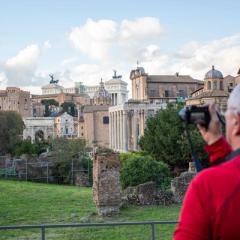
Your Colosseum ticket also includes the Roman Forum and Palatine Hill (within 24 hours), and their accessibility differs sharply from each other. The Roman Forum is largely flat at ground level and has an accessible route with paved sections — the main accessible entries are along Via Sacra and near the Arch of Titus, with a lift at Largo della Salara Vecchia. A newer accessible path now reaches key monuments like the House of the Vestals and the Temple of Romulus, and the park has been steadily expanding the length of fully accessible routes. Be aware, though, that the ancient paving (the classic Roman sampietrini stones) is uneven in places, and some stretches between ruins involve steps.
Palatine Hill is the genuinely challenging part. The hill has a real gradient, and several stretches to the summit are steep with irregular paving, so the full circuit requires significant effort and some upper areas aren’t accessible at all. Partial exploration of the lower gardens and accessible terraces is possible, and the panoramic views over the Forum and Circus Maximus are worth it — but plan the route around your stamina, and ask at the entrance for the current accessible paths. Some specialist tour operators offer an all-terrain "Joëlette" wheelchair (for an extra charge) specifically to manage the harder Palatine terrain.
Services, Getting There, and Practical Tips
Several services make an accessible Colosseum visit smoother. The park offers free loaner wheelchairs on a first-come, first-served basis — a few at the Colosseum's first-floor reception near the Sperone Valadier entrance, and more at the Roman Forum and Palatine Hill entrances — but availability isn't guaranteed, so bring your own if you can, especially in peak season (June–August). There are accessible restrooms on Tier 1 near the entrance and several more across the wider park, and for visually impaired visitors the park maintains a network of tactile panels presenting the architecture and history in relief, designed to support independent visits.
Getting there is straightforward: Metro Line B stops at Colosseo, but the station only has a small stair lift that needs staff assistance and does not take larger or powered chairs, buses 75 and 87 stop at Piazza del Colosseo with low-floor ramps, and an accessible taxi is often the most reliable door-to-door option (book ahead, especially at peak times). Finally, if you'd prefer a structured visit, private accessible guided tours led by licensed guides offer skip-the-line entry and managed elevator use — a good option for a smoother, pre-planned route. Whatever you choose, arrive early, carry your documentation, and give yourself extra time so the day is about the monument, not the logistics. (For route details, see our guide to getting to the Colosseum.)
The trade-off: Relying on the loaner wheelchairs or a walk-up visit risks availability and queues, so a bit of planning — bringing your own aid, booking an accessible tour or taxi, and arriving early — takes forethought. It's what turns a potentially frustrating visit to an ancient ruin into a genuinely rewarding one, where the history is what you remember.
Accessibility features, entrances, lift coverage, the disability threshold for free entry (some operators cite 74%, but this is not stated in official Parco Colosseo information), and services reflect current 2026 information and can change — the park is actively expanding accessible routes and lifts, so confirm the current provisions and required documentation with the official Parco Archeologico del Colosseo before your visit, and arrange any accessible tour or transport in advance. A timed slot is required even for free disabled-visitor tickets.
Common questions
❓ Is the Colosseum wheelchair accessible?
Partially, yes. The Colosseum has step-free entry via the Sperone Valadier entrance and an elevator connecting the first and second tiers, so wheelchair users can reach the main viewing levels and see the arena. It's one of the better-equipped ancient sites in Rome for accessibility. However, it's a ruin with mixed surfaces — the first tier has uneven stone paving — and the underground (hypogeum) and upper tiers are largely not wheelchair accessible. Plan your visit around the first and second tiers and the arena perimeter, ideally early in the day when elevator queues are shortest.
❓ Is entry free for disabled visitors at the Colosseum, and does a carer get in free too?
Yes. The Colosseum offers free entry to a disabled visitor plus one companion or carer, with valid documentation (bring a recognized disability ID and a passport or photo ID). You still need to book a mandatory timed slot even though the ticket is free — either via the disabled-visitor option on the official ticketing site or at the ticket office on presentation of documents. Note that some operators cite a 74% disability threshold, but this isn't stated in the official Parco Colosseo information; if your papers don't specify a percentage, present them at the ticket office and staff will decide on-site.
❓ Can wheelchair users visit the Roman Forum and Palatine Hill?
Yes, both are included in your Colosseum ticket, but the terrain differs. The Roman Forum is largely flat with an accessible paved route (main accessible entries at Via Sacra and near the Arch of Titus), though the ancient stone paving is uneven in places and some paths have steps. Palatine Hill is much harder — steep gradients and irregular paving mean the full circuit takes significant effort and some upper areas aren’t accessible, though lower gardens and accessible terraces are reachable. Some operators offer an all-terrain "Joëlette" wheelchair for the Palatine’s tougher sections.
Our team analyzes what travelers publicly reported about each tour — thousands of reviews, forum threads and questions — and verifies what can be verified against operators and official sources. We publish what the evidence supports, including the parts that argue against a booking.